
By Dr Laurine Platzky (Board Member, REEP (Research Excisable Products, University of Cape Town))
In this blog post, Dr Laurine Platzky provides an in-detail analysis of the Enyobeni Tavern incident in South Africa, which saw 21 children die after consuming alcohol underage. Dr Platzky highlights the consequences of poorly implemented laws and policies in this tragedy and explores what this case means for future legislation around alcohol in South Africa.
On 26 June 2022, 21 young people died during a “pens-down” end of exams celebration at Scenary Park’s Enyobeni Tavern, in East London, Eastern Cape, South Africa. Nine girls and twelve boys aged between 13 and 17 died in the disaster and four people were hospitalised in a critical condition.
During his eulogy at the 6 July funeral of 20 of the 21 young people who died at the Enyobeni Tavern, South African President Cyril Ramaphosa noted that:
“This is not the first time there has been a tragedy in a place where young people gathered to celebrate.
Before this tragedy there was the Osi’s tavern in Khayelitsha in 2015, where eight young women died. There was the Throb nightclub disaster in Durban in 2000, where 13 children died and 100 were injured.
What is common to all of these is that they were selling and serving alcohol to under-age patrons, in violation of the law.
This is not to even count the many incidents across the country of young people getting injured and hurt in alcohol related violence inside these places, getting into road accidents, or becoming victims of crime after leaving these places.
It is not to even count the risky behavior like driving drunk, or having unprotected sex, that happens when young people who are below the legal age of drinking are sold alcohol in violation of the law.”
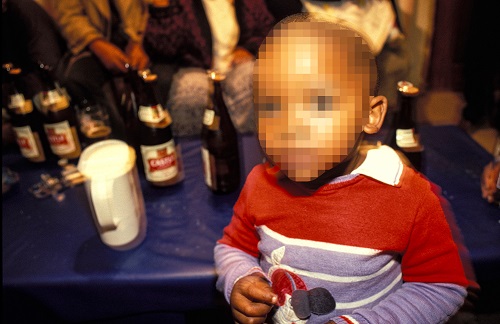
Indeed underage drinking has been a problem for many years amongst teenagers in South Africa. Research has revealed that many pre-teens report having been drunk on a number of occasions.
According to TimesLive[i], the Enyobeni Tavern, which had been licensed since 2012, had not been complying with several liquor law regulations. Community members and parents complained that they had reported underage and late-night drinking at the venue to the Eastern Cape Liquor Board (ECLB) previously, but nothing had been done.
A national outcry followed the deaths. During the President’s extensive eulogy, he pronounced on many of the points which resulted in the publication of the stalled 2016 Liquor Amendment Bill. His speech reflected the World Health Organisation’s ’10 best buys’ for reducing the harms caused by alcohol, but no improvements in law have yet been announced.
StockPhoto©Eric Miller
- Legal Process: Charges, cases, inquest
Following widespread speculation on the causes of the 21 deaths and injured young people, an investigation was opened into the probable causes of the deaths. Authorities ruled out stampede as cause of death. Survivors reported that they had noticed a strange smell, ‘like pepper spray’ as they managed to exit the building. Speculation of carbon monoxide[ii] and/or methanol poisoning was reported[iii]. Findings changed from those initially announced. The most recently publicised reports indicate that the parents and relatives were told that asphyxiation was ruled as the cause of death[iv].
To date the owner and manager have been charged with supplying alcohol to underage persons. They have made court appearances (5 October and 25 November) and the trial is due to commence on 25 April 2023. No inquest has been announced.
In the words of President Ramaphosa:
“Children should not have been allowed inside that place, a place of adults. They should not have been served alcohol. What was happening was illegal…. there are liquor establishments putting profits before the lives of the children of this country.”
Widespread responses across the country, included finger pointing at parents for not controlling their children, condemning the South African Police Services (SAPS) for allowing trading hours to be ignored, blaming the Eastern Cape Liquor Authority for not having fined or closed down a non-compliant licensed outlet, questioning what action had been taken following the various complaints about numerous transgressions, questioning the East London municipality (Buffalo City Metro) for allowing building regulations to be flouted, but in the end President Ramaphosa put it clearly:
“Blame must be laid at the feet of those who are making money off the dreams and lives of the young people of South Africa by breaking the law and selling them alcohol.
The law is clear. Alcohol may not be sold or served to anyone under the age of 18. Owners of establishments that are permitted to sell alcohol have to ensure that anyone they sell alcohol to is over the age of 18 by asking for ID’s.
…But there are others who are out to make money whatever the cost.
They lure young people with promises of cheap or free alcohol. They produce flyers and adverts featuring young people drinking, to make it look cool and acceptable.
With all this aggressive marketing of alcohol to young people, is it then no wonder that at least one in every four young South Africans has consumed alcohol by the ages of 15 to 19?
Is it then no wonder that our children have come to associate having a good time with having drinks, and why so many indulge in heavy or binge drinking?”
As the President said at the funeral, “Provincial and national liquor authorities must increase enforcement by monitoring registered outlets and closing down unregistered ones.”
The reduction of alcohol-related harms is multi-dimensional so it is unsurprising that the outcry would manifest as blame on various agents from ‘the parents to the government’. Better regulation is indeed required – an integrated interactive approach involving many stakeholders, all three spheres of government, multiple departments and informed media. The evidence for intervention is clear, but government has allowed vested interests to delay and obfuscate what has to be done.
Three of the WHO’s ‘best buys’ were explicitly mentioned in the President’s eulogy, and they are being interpreted by those campaigning for the reduction of alcohol related harm. Simple slogans calling for the authorities to ‘stop underage drinking’, ‘ban alcohol advertising’, ‘reduce trading hours’ present the issues clearly and succinctly. Together with increased excise tax, introduction of minimum unit pricing, the importance of monitoring retail outlets and regular inspections of licensed and unlicensed outlets, to enforce the law and ensure consequences of transgression need to be systematically managed.
- Urgent Legal Intervention Required
Going forward as a priority, at least three targeted areas require to be given the authorities’ attention to increase the chances of preventing another Enyobeni tragedy:
3.1 Stop Underage Drinking
Currently Section 10 of the Liquor Act (59 of 2003) prohibits selling or supplying liquor to persons under the age of 18. The 2016 Draft Liquor Amendment Bill proposed to raise the age to 21, but six years later there has been no progress on the Bill. Whereas medical evidence indicates that the brain only stops developing around 25 years old, arguments against raising the legal drinking age include that South Africans may vote or drive cars at the age of 18, so why not drink? Some argue that the state appears unable to police the 18 year limit, so how would they enforce a 21 year limit?
3.2 Ban Alcohol Advertising
Whereas the liquor industry would prefer to be left to self-regulate advertising, White Paper on alcohol harms reduction gazetted in 2017 by the Western Cape Government argued that there should be no liquor advertising visible to under 18 year olds. Since then, extensive and intrusive social media technology, as well as new tactics through digital marketing, such as the ubiquitous ‘click and buy’, enable liquor to be purchased and delivered 24/7 without reliable age verification.
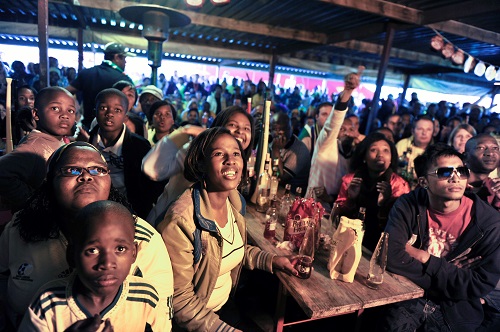
Advertising is particularly ominous in relation to young people, specially those from poverty-stricken backgrounds, many of whom have grown up surrounded by unemployed adults who ‘drown their sorrows’. Advertising nurtures false aspirations, encourages conspicuous consumption and encourages notions of needing to admired, respected and successful – by drinking alcohol. Having identified young African women as their growth market, the global liquor industry manipulates feminist concepts of female strength and the courage to speak out, ‘be one’s own person’ by drinking alcohol, often portrayed in groups of young attractive well-dressed professional women drinking together. Already South Africa’s biggest category of problem drinkers is young men and now increasingly this advertising targeting young (black) women appears to be resulting in their binge drinking, as experienced at the Enyobeni Tavern. Controlling advertising is a national competency.
StockPhoto©Eric Miller
3.3 Reduce Trading Hours
Trading hours are set by the nine provinces. Where municipal by-laws have been adopted, trading hours and days are established at local level. Some municipalities have set excessively long hours, arguing for convenience and job creation. Yet evidence shows that easy access, including excessive trading hours and cheap prices, fuels alcohol-related harm. The South African Constitution enables the national government reduce such harm by setting national norms and standards on maximum hours.
None of these interventions are unworkable. They have all been debated in South Africa for some years and require to be legislated. As the President reminded South Africans in his eulogy:
“Many years ago, when government embarked upon a programme to reduce harm caused by tobacco use, it was heavily criticized and met with resistance.
Today we take it for granted that the anti-smoking laws exist, and they are being complied with by the majority of our people.
A similar approach, matched by the necessary interventions is needed to reduce the harm of alcohol abuse amongst our young people.”
On 30 June SAAPA wrote to the SA Human Rights Commission[v] calling for an independent inquiry not only into the Enyobeni tragedy, but also more broadly into the failure of all spheres of government and public agencies to protect all those living in South Africa from alcohol related harms.
“our concern is not this specific incident alone, but the underlying causes for its occurrence and the fact that it is symptomatic of a problem that exists across the country and is happening on an ongoing basis. This is that there is wide-spread alcohol-related harm as a result of the failure of government to introduce effective legislation to manage the sale and consumption of alcohol; the failure of government to fulfil its constitutional and statutory duty to enable citizens to exercise their right to have a meaningful say over when, where and how alcohol is sold and consumed in the communities; and the failure of the relevant authorities to enforce existing laws in order to protect the public from alcohol-related harm.
“We believe further that government in all spheres and in multiple agencies is failing to protect the entire citizenry from the harmful use of alcohol. Accountability for this terrible incident must be demanded from the people involved in running the tavern all the way up to the President and Cabinet who have failed in their ‘duty of care’ to ensure that our people are guaranteed that protection.”
Presenting the memorandum to the NPA outside court on behalf of the families, representative Nkululeko Ncandana called for the accused owner and manager of the Enyobeni Tavern to be charged with murder. He added that “all state institutions will need to be held accountable for the failure to protect the citizenry by allowing the reckless sale of alcohol by the owners of Enyobeni tavern.”
“We are calling on the National Prosecuting Authority to prosecute the owners for murder or related offences. Failing that, to fast-track the institution of an inquest in terms of the Inquest Act,” he said.
The case has been postponed for trial to 25 April 2023.
The Enyobeni Tavern tragedy highlights so much of what is distressing in South Africa today: individual suffering as a result of poorly implemented laws and delayed policy implementation, as a consequence of mobilised vested interests, followed by appropriately articulated pronouncements, in turn, weakly pursued by ineffective state intervention to protect the poor and the vulnerable, eventually benefiting a greedy well-connected global industry.
Civil society needs to be extremely vigilant both narrowly monitoring court proceedings, and more broadly insisting on the effective reform of liquor legislation, in order to prevent such incidents being repeated across the country.
[i] https://www.timeslive.co.za/news/south-africa/2022-07-05-listen-eastern-cape-liquor-board-cites-staffing-issues-after-enyobeni-tavern-tragedy/
[ii] Methanol found in 21 teens who died in South Africa tavern – CBS News
[iii] https://www.dailymaverick.co.za/article/2022-07-19-enyobeni-tavern-methanol-poisoning-probed-as-a-possible-cause-of-deaths
[iv] https://www.algoafm.co.za/local/enyobeni-families-want-tavern-owners-to-be-prosecuted-for-murder
[v] https://www.sabcnews.com/sabcnews/human-rights-commission-receives-complaint-about-enyobeni-tavern-tragedy/
SHAAP Blogposts are published with the permission of the authors. The views expressed are solely the authors’ own and do not necessarily represent the views of Scottish Health Action on Alcohol Problems (SHAAP).