
By Dr Lesley Graham
In this blog, SHAAP Steering Group Member Dr Lesley Graham reflects on the current management of those with alcohol problems within the justice system in Scotland and looks back on SHAAP’s most recent symposium “Alcohol (in)justice”.
Many people coming into contact with the justice system experience alcohol problems, with nearly two thirds (63%) having an Alcohol Use Disorder and almost a third (31%) possibly dependent. For people who have been imprisoned in Scotland, the risk of death from alcohol causes was 3 times higher than the general population. There is a strong link between alcohol and crime, particularly violent crime (44% of which is linked to alcohol) and 40% of prisoners stating they were drunk at the time of their offence. Alcohol problems often present with other morbidities particularly drug use and mental health problems.
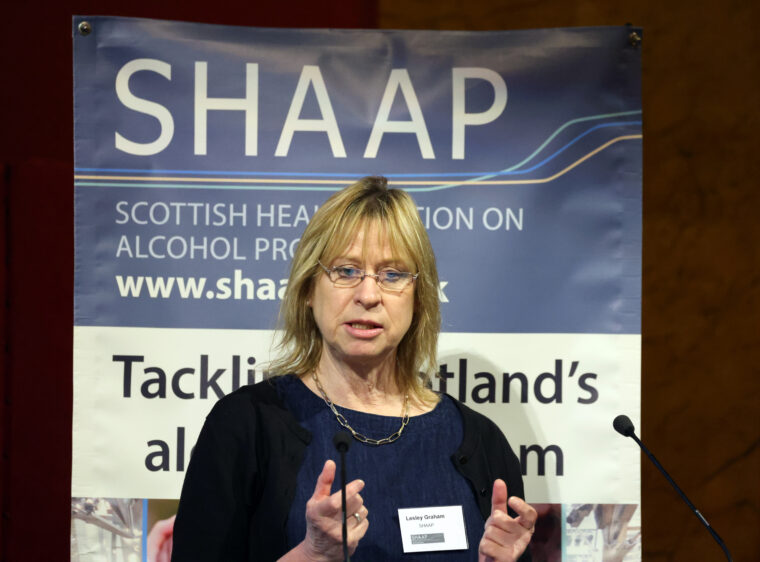
It’s for these reasons that I was delighted to take part in the very well attended symposium, Alcohol (in)Justice, held by SHAAP in April 2023. It was the culmination of a year of working with SHAAP colleagues to map what is happening with regard to how those with alcohol problems are managed in the justice system. We had met with key stakeholders and had supplemented those discussions with desk top research. We concluded that this was not a new or unknown issue with considerable policy, research and guidelines available but that there was a perceived implementation gap. In hosting a symposium, we hoped to bring range of people from different disciplines together to discuss and network as well as to identify what more could be done.
As Sheriff Fleming said in his talk on the Alcohol Court, both crime and alcohol problems are a manifestation of other problems. Many in the justice system are from disadvantaged areas (in prison, a third come from the 10% most deprived areas in Scotland) and many have had challenging life experiences. Of those in prison, 25% had been in care at some point and nearly a half had experienced physical abuse. Experience of the justice system can compound poor health and wellbeing with research showing those in prison have significantly worse wellbeing than those in the general population, particularly for those on remand and those with multiple prison episodes.
The justice setting provides the opportunity to recognise individuals’ alcohol problems and provide access to treatment and support which should be holistic and trauma-informed. This has the potential to reduce health inequalities; reduce further crime and increase the community benefit. However, figures suggest that opportunities are being missed. For example, in 2019/20 in prison only about a fifth of those with alcohol dependency were referred into specialist treatment and only 29% of those eligible had received an Alcohol Brief Intervention.
Throughout the symposium we heard from speakers across the justice journey. A panel then responded to the presentations as well as taking questions from the audience. Some of the key issues raised included that alcohol is, once again, in the shadow of drugs; the need for better data gathering and sharing; the importance of partnership working; innovative practice and the crucial role those with lived experience can play, both in peer support, research and service design. The symposium report and slides are available HERE.
This is the first time SHAAP has focused on the justice system and I hope it has shone a light in the shadows.
Dr Lesley Graham
SHAAP Steering Group member 2006-present
Retired public health physician
Former lead for Alcohol, Drugs and Health in Justice, ISD (now Public Health Scotland).
SHAAP Blogposts are published with the permission of the authors. The views expressed are solely the authors’ own and do not necessarily represent the views of Scottish Health Action on Alcohol Problems (SHAAP).